California Insurance Adjuster Bond Overview
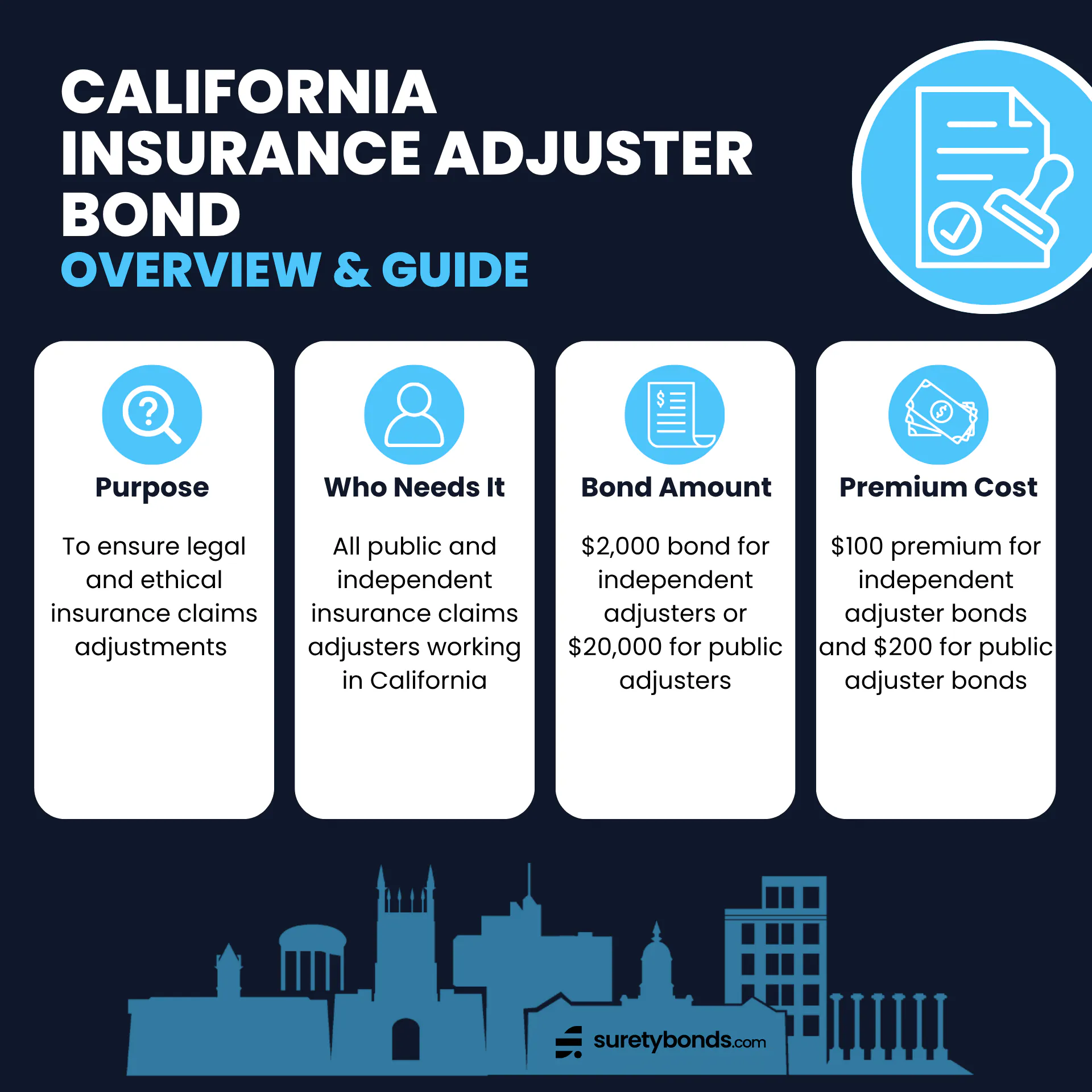
- Purpose: To ensure legal and ethical insurance claims adjustments
- Who Needs It: All public and independent insurance claims adjusters working in California
- Regulating Body: The California Department of Insurance
- Bond Amount: $2,000 for independent adjusters or $20,000 for public adjusters
- Premium Price: $100 for independent or $200 for public adjusters
What Is a California Insurance Adjuster Bond?
A California insurance adjuster surety bond is a financial guarantee that ensures that adjusters follow industry and state regulations.
The bond insures clients if a claims adjuster acts fraudulently or unethically. With the surety bond in place, consumers can file claims for financial compensation if an adjuster violates license laws.
Who Needs an Insurance Adjuster Bond?
All public adjusters and independent adjusters working on claims for California properties need to be bonded and licensed. Independent adjusters solely working on claims under another licensed adjuster do not need a separate bond.
If you work in the insurance industry, you might also need a California insurance broker bond or surplus lines broker bond.
How Much Do Insurance Adjuster Bonds Cost in California?
An insurance adjuster surety bond costs $100 for independent insurance adjusters and $200 public insurance adjusters in California. This upfront premium covers a one-year term.
If you select a multi-year term, your bond will be active for two or three years and you’ll save 25% at checkout.
SuretyBonds.com offers the lowest available rates from our nationwide provider network with no added fees.
How Does a California Insurance Adjuster Bond Work?
This type of bond creates a legally-binding contract between the insurance adjuster, the state agency and the surety provider. It protects consumers, rather than the insurance professionals.
| Bond Party | Description |
|---|---|
| 1. Principal | The insurance adjuster filing the bond |
| 2. Obligee | The California Department of Insurance |
| 3. Surety | The issuing surety provider |
As the principal, you’re responsible for upholding all applicable laws outlined in California Code of Regulations Title 11. The surety protects any clients harmed by fraudulent actions by paying out valid claims.
How Do I Get an Insurance Adjuster Bond?
You can get your California independent or public adjuster bond in minutes. Just enter your information using the form on this page and checkout through our secure, online portal.
We’ll email your official bond form in minutes. If you don’t see it, please check your spam or junk folder. Remember to submit the bond to the DOI.
Can I Get Bonded With Bad Credit?
Yes, these bonds are available at a flat rate with no application. That means there is no credit check requirement and everyone is automatically approved.
How Do I Renew My Insurance Adjuster Bond?
You must renew your California insurance adjuster surety bond before its current term expires to keep your license in good standing with the CDI.
Just pay your SuretyBonds.com renewal invoice when prompted and your bond will be automatically extended for another term.
How to Become an Insurance Claims Adjuster in California
The California Department of Insurance (CDI) Adjuster Unit enforces licensing requirements for insurance adjusters in the state.
- Fill out a license application form.
- Purchase a surety bond.
- Provide an application for a branch office certificate, if applicable.
- Provide your fingerprints and 2x2 passport photo.
- Pass the licensing examination.
- Pay all required fees.
- Complete an authorization application and sample contract form.
For more detailed instructions, check out our complete guide: How to Get a California Public Insurance Adjuster License.
What’s the Difference Between Independent and Public Claims Adjusters?
The main difference between a public adjuster versus an independent adjuster is the party they work to benefit:
- Independent insurance adjusters adjust and negotiate claims on behalf of insurance companies.
- Public insurance adjusters are hired by individual claimants who pay them a percentage of the settlement.